
Guide to the Glass House Mountains
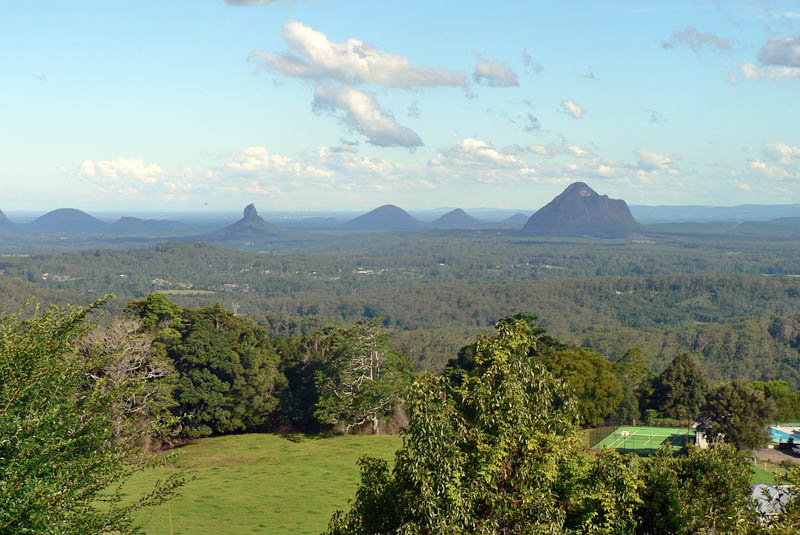
If you’ve ever driven north from Brisbane on a clear day, you’ll know the moment the Glass House Mountains appear on the horizon. These craggy volcanic peaks rise sharply from the surrounding plains of South-East Queensland, and they’re one of the region’s best-loved landmarks. Just under an hour’s drive north of Petrie, the Glass House Mountains make an easy and rewarding day out, whether you’re after a bushwalk, a picnic with a view or a relaxed scenic drive through the Sunshine Coast Hinterland.
This guide covers everything you need to know before visiting the Glass House Mountains, from the peaks themselves and the best walking tracks and lookouts to safety advice, family tips and how to plan your day.
Where Are the Glass House Mountains?
Exploring the Glass House Mountains in Queensland’s Sunshine Coast Hinterland
The Glass House Mountains sit in the southern part of the Sunshine Coast Hinterland, within the Sunshine Coast Region. The peaks are spread across farmland, pine plantations and bushland around the small townships of Glass House Mountains, Beerburrum and Beerwah, with the Bruce Highway (M1) running along their eastern edge.
Before you visit, it helps to know that the area is made up of several different types of land, each with its own rules:
| Land type | Examples | What to know |
| National park | Glass House Mountains National Park – Tibrogargan, Ngungun, Beerburrum and Beerwah trailheads | Managed by Queensland Parks and Wildlife Service; no dogs, no camping |
| State forest | Glass House Mountains Lookout, Wild Horse Mountain Scenic Lookout, Coochin Creek camping area | Managed by Queensland Parks and Wildlife Service; different facilities and rules apply |
| Council-run sites | Glass House Mountains Visitor and Interpretive Centre, Bankfoot House, Mary Cairncross Scenic Reserve | Set opening hours apply |
| Private attractions | Australia Zoo, Maleny Botanic Gardens and Bird World | Paid entry and set opening hours |
How Far Are the Glass House Mountains from Brisbane?
The Glass House Mountains are roughly 65 to 75 kilometres north of Brisbane’s CBD, depending on which trailhead or lookout you’re heading to. The drive via the Bruce Highway generally takes around an hour in normal traffic. Allow extra time on weekends and during school holidays, when traffic heading to the Sunshine Coast can build up.
How Far Are the Glass House Mountains from Petrie and Moreton Bay?
From Petrie, the main trailheads around Glass House Mountains township are roughly 50 kilometres away, which usually works out to around 45 to 55 minutes by car. Wild Horse Mountain Scenic Lookout sits right beside the M1, so it’s a little closer. This makes the area well suited to Glass House Mountains day trips from anywhere in the City of Moreton Bay.
Which Towns Are Closest to the Glass House Mountains?
- Glass House Mountains township – the closest town to the main trailheads, with a visitor centre, train station, pub and local shops
- Beerburrum – a small township at the southern end of the range and home to the Beerburrum trailhead
- Beerwah – a larger town to the north with more shops and eateries, plus Australia Zoo
- Landsborough – a short drive further north, on the way up to Maleny and the hinterland villages
Why the Glass House Mountains Are Worth Visiting
Few places this close to Brisbane offer such dramatic natural scenery. In a single visit to the Glass House Mountains you can stand at the base of an ancient volcanic plug, walk through eucalypt forest and heathland, and look out over peaks that have been culturally significant to First Nations peoples for thousands of years. Best of all, you don’t need to be an experienced hiker to enjoy it. Many of the best views are just a short stroll from the car park.
What Are the Glass House Mountains Famous For?
The Distinctive Volcanic Peaks of the Glass House Mountains
The Glass House Mountains are best known for their striking silhouettes. Each peak has its own shape, from the broad bulk of Mount Beerwah to the crooked summit of Mount Coonowrin, and together they form one of the most recognisable skylines in Queensland.
How the Glass House Mountains Were Formed
The peaks formed through volcanic activity around 26 to 27 million years ago. Molten rock pushed up into the earth’s crust and cooled into hard rock such as trachyte and rhyolite. Over millions of years, the softer rock surrounding these formations eroded away, leaving the resistant volcanic plugs and domes standing high above the plain. The Trachyte Range, which you can explore on foot, takes its name from this volcanic rock.
Why Captain James Cook Named the Glass House Mountains
James Cook, then a lieutenant, sailed past this stretch of coast aboard the Endeavour in 1770. The peaks are said to have reminded him of the glass furnaces of his native Yorkshire, and the name “Glass House Mountains” has stuck ever since.
The National and Cultural Heritage Significance of the Mountains
The Glass House Mountains are recognised on both the Queensland and National Heritage lists as a landscape of national significance. Their importance goes far beyond geology. The mountains lie within the traditional Country of the Gubbi Gubbi (also written Kabi Kabi) and Jinibara peoples, and they hold ongoing spiritual and cultural significance for Traditional Owners. Many ceremonial sites in the area are still protected today. Mount Beerwah and Mount Tibrogargan are especially sacred, and the Jinibara and Kabi Kabi peoples ask visitors not to climb them. Queensland Parks supports this request.
Some cultural knowledge connected to the mountains is not for public sharing, so the best approach as a visitor is simple: stay on marked tracks, respect any signage and closures, and treat the landscape as a living cultural place rather than just a scenic backdrop.
Native Wildlife, Forests and Unique Plant Life
The Glass House Mountains support a mix of habitats, including wet and dry eucalypt forest, casuarina groves, melaleuca forest and heathland. Keep an eye out for yellow-tailed black-cockatoos, and look up around Mount Tibrogargan, where peregrine falcons are often seen soaring overhead. In spring, the heathland along the Trachyte Range can be bright with native wildflowers.
Which Mountains Make Up the Glass House Mountains?
The Glass House Mountains are usually counted as 16 peaks, 11 of which are protected within the national park. Here are the ones you’re most likely to spot and hear about.
Mount Beerwah – The Highest Peak in the Range
At 556 metres above sea level, Mount Beerwah is the tallest of the Glass House Mountains. It holds deep significance for the Jinibara people, and Traditional Owners ask visitors not to climb it. The best way to experience Beerwah is the short Mount Beerwah view walk, a stroll through eucalypt forest to a grassy area looking up at the peak.
Mount Coonowrin – The Iconic Crookneck Peak
Mount Coonowrin, often called Crookneck, is instantly recognisable by its tilted summit and rises to 377 metres. Mount Coonowrin is closed to the public. It has been a Restricted Access Area since 1999 because of the high risk of rockfalls, and fines apply for entering the area. The best way to appreciate Coonowrin is from a lookout or the Mount Ngungun summit.
Mount Tibrogargan – The Distinctive Mountain Resembling a Face
Mount Tibrogargan stands 364 metres tall, and many visitors say its rugged profile resembles a face gazing out to sea. Tibrogargan is sacred to Traditional Owners, who ask visitors not to climb it. Instead, enjoy it from the Tibrogargan circuit, which loops around its base and shows off its profile from many angles.
Mount Ngungun – A Popular Summit Hike
Mount Ngungun (253 metres) is home to one of the most popular summit walks in the Glass House Mountains. The track is well formed, though steep in places, and the summit offers excellent views of Tibrogargan, Coonowrin and Beerwah.
Mount Beerburrum – A Steep Walk with Panoramic Views
Mount Beerburrum rises 280 metres above sea level. Its summit walk follows a very steep paved path to a working fire tower, where you’ll find panoramic views across the surrounding peaks and forest.
Mount Coochin – The Twin Peaks of the Region
Mount Coochin, with its two rounded summits, is one of the quieter peaks in the range. It’s best enjoyed from lookouts and scenic drives rather than on foot.
Mount Elimbah and the Other Volcanic Peaks
The remaining peaks include Mount Elimbah, the twin Tunbubudla peaks, Tibberoowuccum, Mount Miketeebumulgrai and Wild Horse Mountain. Wild Horse Mountain is the smallest of the group at 123 metres, and it’s the only peak east of the Bruce Highway, which makes its lookout a great vantage point for viewing the others. Many of these peaks have no public walking track, so check access before planning any visit.
Best Things to Do in the Glass House Mountains
Explore the Glass House Mountains National Park
Glass House Mountains National Park protects most of the peaks and offers a network of graded walking tracks from several trailheads. Entry is free, though there are a few important rules: dogs are not permitted, and camping is not allowed in the national park.
Enjoy Panoramic Views from the Glass House Mountains Lookout
The Glass House Mountains Lookout is one of the easiest ways to take in the whole range. It’s located in the state forest on Glass House–Woodford Road, and the view is right at the day-use area, so you don’t need to walk anywhere to enjoy it. On a clear day you can see across the peaks towards the coast. The day-use area has toilets and barbecues, and there is an optional 800 m forest walk if you’d like to stretch your legs.
Hike Through Native Bushland and Eucalypt Forest
The Glass House Mountains walks range from short strolls to challenging full-day hikes. The Tibrogargan and Trachyte circuits are great for anyone who wants to immerse themselves in the forest without tackling a summit.
Visit Wild Horse Mountain Scenic Lookout
Wild Horse Mountain Scenic Lookout is just off the M1 at Exit 171 (Johnston Road), the same exit as the highway service centre, which makes it a convenient first or last stop on a trip from Petrie. A sealed path climbs steeply for about 700 metres to a lookout tower with 360-degree views over the Glass House Mountains, Pumicestone Passage and Bribie Island. The walk is short, but you’ll certainly feel the incline.
Discover the Region’s Native Wildlife
Birdwatchers will feel right at home in the Glass House Mountains. Bring binoculars and visit early in the morning, when birdlife is most active and the temperatures are cooler.
Enjoy a Picnic Surrounded by Mountain Scenery
The Glass House Mountains Lookout day-use area is the standout picnic spot, with barbecues and views of the peaks. The Mount Beerwah day-use area, a short walk from its car park, is another peaceful option with a picnic table and toilets.
Take a Scenic Drive Through the Sunshine Coast Hinterland
The Glass House Mountains Tourist Route (Steve Irwin Way and Old Gympie Road) winds past farms, pine forests and roadside fruit stalls, with the peaks appearing around almost every bend. It’s an easy way to see the range if walking isn’t on your agenda.
Visit the Glass House Mountains Visitor and Interpretive Centre
The Glass House Mountains Visitor and Interpretive Centre is located in Settlers Rotary Park on Bruce Parade, in Glass House Mountains township. It’s staffed by local volunteers and features interpretive displays on the area’s history, along with maps and local walking advice. The park around it has toilets, a playground and picnic tables. Check the current opening hours before you go.
Discover Local History at Bankfoot House Heritage Precinct
Bankfoot House, on Old Gympie Road, is one of the oldest homesteads on the Sunshine Coast and offers a glimpse into the area’s early European settlement and the old Cobb & Co route. Opening days are limited, so check ahead before including it in your plans.
Explore Nearby Hinterland Towns and Attractions
If you have time to spare, continue north to Landsborough and then up the range to Maleny and Montville. Both are known for their cafés, galleries and hinterland views back over the Glass House Mountains.
Best Glass House Mountains Walks and Hiking Trails
All of the following details are from Queensland Parks and Wildlife Service. Track conditions can change, so check parks.qld.gov.au for alerts before you set out.
Tibrogargan Circuit – A Scenic Walk Around the Base of Mount Tibrogargan
- Distance: 4.1 km return
- Time: Allow 1 hour 30 minutes
- Grade: 3
- Start: Tibrogargan trailhead, between Beerburrum and Glass House Mountains townships (via Marshs Road and Barrs Road)
This is one of the best all-round Glass House Mountains walks. About 1 km (roughly 20 minutes) in, you’ll reach Mountain View lookout, with views of Beerwah, Coonowrin, Tibberoowuccum and Tunbubudla. The track then loops around the base of Tibrogargan through casuarina, eucalypt and melaleuca forest. Queensland Parks recommends it as a great walk for families.
Mount Ngungun Summit Track – One of the Region’s Most Popular Hikes
- Distance: 2.8 km return
- Time: Allow 2 hours
- Grade: 4
- Start: Ngungun trailhead, about 3 km from Glass House Mountains township via Coonowrin Road and Fullertons Road
The track climbs through open forest with a fern understorey and passes a small rock overhang along the way. Near the top, it runs close to sheer cliff edges, so supervise children closely. Rocks become very slippery when wet.
Mount Beerburrum Summit Walk – A Short but Steep Challenge
- Distance: 3.5 km return
- Time: Allow 1 hour 30 minutes
- Grade: 3
- Start: Beerburrum trailhead, next to the Beerburrum State School car park
After about 1 km through forest, the track becomes a very steep concrete path, with around 750 metres of relentless climbing to the fire tower at the summit. Don’t let the Grade 3 rating fool you: it’s a tough climb, and the descent is hard on knees. The surface can be slippery, so wear shoes with good grip and ankle support, and pace yourself.
Older guides often quote a shorter distance. That figure is from the old car park, which has closed, so all walks now start from the Beerburrum trailhead.
Glass House Mountains Lookout Track – A Forest Walk with Panoramic Views
- Distance: 800 m
- Time: Allow 45 minutes
- Grade: 3
- Start: Glass House Mountains Lookout day-use area (state forest)
This short walk loops from the lookout through scribbly gum forest and down into a wet eucalypt gully. There are plenty of steps, so it isn’t suitable for prams or wheelchairs.
Trachyte Circuit – Explore Woodland and Heathland
- Distance: 5.7 km return
- Time: Allow 2 to 3 hours
- Grade: 3
- Start: Tibrogargan trailhead
This circuit winds through open woodland and heathland between Tibrogargan and Tibberoowuccum, and it passes Jack Ferris lookout at the northern end of the Trachyte Range.
Yul-yan-man Track – A Challenging Route for Experienced Bushwalkers
- Distance: 9 km return from Beerburrum trailhead (allow 3 to 4 hours), or 13.4 km return from Tibrogargan trailhead (allow 4 to 5 hours). A 6.7 km one-way walk is also possible if you arrange a car shuttle.
- Grade: 5
- Start: Beerburrum or Tibrogargan trailhead
Yul-yan-man comes from the Kabi Kabi language and means “walk slowly”, which is good advice on this track. It involves exposed, slippery rock, rock scrambling and sheer cliff edges. Don’t start the walk if rain is forecast or the weather is extremely hot. Carry extra water and a fully charged phone, and consider bringing a personal locator beacon.
Which Glass House Mountains Walk Is Best for Beginners?
The Tibrogargan circuit is the best starting point for beginners. It’s a manageable length on a well-defined track and offers great views of the mountain. If you’d like something shorter, walking just to Mountain View lookout and back takes about 40 minutes.
Which Walking Tracks Are Suitable for Families?
The Tibrogargan circuit, the Mount Beerwah view walk (200 m return, about 15 minutes) and the Glass House Mountains Lookout area are the best family options. Older children with good stamina may enjoy Mount Ngungun, but only with close supervision near the cliff edges.
How to Choose a Walk Based on Fitness and Experience
| Walk | Distance | Time | Grade | Best for |
| Mount Beerwah view | 200 m return | 15 min | 3 | A short stroll for most visitors |
| Glass House Mountains Lookout track | 800 m | 45 min | 3 | Short forest walk (many steps) |
| Tibrogargan circuit | 4.1 km return | 1 hr 30 min | 3 | Beginners and families |
| Mount Beerburrum summit | 3.5 km return | 1 hr 30 min | 3 | Fit walkers – very steep, hard on knees coming down |
| Trachyte circuit | 5.7 km return | 2–3 hr | 3 | Walkers wanting a longer outing |
| Mount Ngungun summit | 2.8 km return | 2 hr | 4 | Walkers with moderate fitness |
| Yul-yan-man track | 9–13.4 km return | 3–5 hr | 5 | Experienced bushwalkers with scrambling skills |
Mount Beerwah and Mount Tibrogargan summits aren’t included. Traditional Owners ask visitors not to climb these sacred peaks, so we suggest enjoying them from the walks and lookouts above.
The Best Lookouts in the Glass House Mountains
| Lookout | Walk required | Land type |
| Glass House Mountains Lookout | None – views from the day-use area | State forest |
| Wild Horse Mountain Scenic Lookout | ~700 m steep uphill path each way | State forest |
| Mountain View lookout | ~1 km each way on the Tibrogargan circuit | National park |
| Jack Ferris lookout | Reached via the 5.7 km Trachyte circuit | National park |
Glass House Mountains Lookout – Sweeping Views Across the Peaks
The Glass House Mountains Lookout is the easiest and most accessible lookout in the area. It’s located on Glass House–Woodford Road, about 2.7 km from Old Gympie Road, and you can drive right up to it in a conventional vehicle. Of all the Glass House Mountains lookouts, this is the best choice if you’d like the view without the walk.
Wild Horse Mountain Scenic Lookout – A Short Climb with Wide Views
Wild Horse Mountain Scenic Lookout sits on the eastern side of the M1, so its views take in both the Glass House Mountains to the west and Pumicestone Passage to the east. The 700 m path to the top is sealed but steep.
Jack Ferris Lookout – A Viewpoint Along Trachyte Ridge
Jack Ferris lookout is only reachable on foot, via the Trachyte circuit. It’s a quiet spot along the northern end of the Trachyte Range and rewards walkers who choose the longer circuit.
Mountain View Lookout – Scenic Views Along the Tibrogargan Circuit
Mountain View lookout is about 20 minutes’ walk from the Tibrogargan trailhead. It offers views across to Beerwah and Coonowrin, making it an easy win for families who don’t want to complete the full circuit.
Where to Photograph the Glass House Mountains
- Glass House Mountains Lookout – for wide shots of several peaks at once
- Mount Ngungun summit – for elevated views of Tibrogargan, Coonowrin and Beerwah
- Wild Horse Mountain Scenic Lookout – for a panorama that combines the mountains and the coast
- Mary Cairncross Scenic Reserve (Maleny) – for the classic view of the range from the hinterland
The Best Time of Day to Visit the Lookouts
Early morning usually offers the clearest air, softer light and quieter car parks. Sunrise in South-East Queensland varies from before 5 am in midsummer to around 6:30 am in midwinter, so check the time before you set out. Late afternoon can also be beautiful, but haze tends to build on warm days.
Are the Glass House Mountains Suitable for Families?
Family-Friendly Walking Tracks and Scenic Stops
Yes, and a family visit doesn’t need to include climbing a mountain. The Glass House Mountains Lookout, the Mount Beerwah view walk and the first section of the Tibrogargan circuit to Mountain View lookout all offer big views for little legs.
Where to Enjoy a Picnic with Children
The Glass House Mountains Lookout day-use area has barbecues and toilets. Settlers Rotary Park, beside the visitor centre in Glass House Mountains township, has a playground, toilets and picnic tables, which makes it a handy spot for a break with younger kids.
Wildlife Spotting and Nature Photography
Turn the walk into a game of spotting birds, lizards and wildflowers. Remind children to watch quietly from the track and never feed or approach wildlife.
What Parents Should Know Before Visiting
- Several tracks, including Mount Ngungun, pass close to sheer cliff edges, so supervise children closely
- Mount Beerburrum’s concrete path is very steep in both directions and tough on young legs
- Closed-toe shoes with good grip are essential
- Carry plenty of water and sun protection, even on shorter walks
Accessibility Considerations for Visitors with Mobility Needs
Some day-use areas, including the Glass House Mountains Lookout, have accessible facilities such as toilets, and the main view at the lookout can be enjoyed without walking a track. However, the walking tracks themselves are generally not wheelchair accessible. For advice on specific sites, contact Queensland Parks and Wildlife Service before your visit.
Are Dogs Allowed in the Glass House Mountains National Park?
No. Domestic animals, including dogs, are not permitted in Glass House Mountains National Park. If you’re travelling with a pet, check the rules for each individual site before you go.
When Is the Best Time to Visit the Glass House Mountains?
Visiting During Autumn and Winter
Autumn and winter are generally the most comfortable seasons for longer walks in the Glass House Mountains. Conditions are cooler and often drier, which makes this a popular time for longer walks such as Mount Ngungun and the Trachyte circuit. Fine winter weekends get busy, so arrive early.
Exploring the Mountains in Spring
Spring often brings wildflowers to the heathland. Temperatures rise quickly towards the end of the season, so plan longer walks for the morning.
What to Expect During Summer
Summer is hot and humid, and afternoon storms are common. Exposed rock also radiates a lot of heat. If you visit in summer, start early, carry extra water and aim to be off the tracks before the hottest part of the day or any storm activity.
Is It Safe to Hike After Rain?
Wet rock is dangerously slippery, and rain also increases the risk of rockfalls. Queensland Parks warns that rocks become very slippery in wet conditions, particularly on steep tracks such as Mount Ngungun. After rain, stick to gentler tracks or enjoy the views from a lookout instead.
The Best Time of Day for Walking and Photography
Early starts are best for comfort, parking and light. Allow enough time to finish any walk in daylight, as descents can take longer than you’d expect.
How Weather and Track Conditions Affect Your Visit
Check the Bureau of Meteorology forecast and the park alerts on parks.qld.gov.au before you leave. Tracks can close temporarily due to weather, fire or maintenance.
How to Get to the Glass House Mountains
Driving to the Glass House Mountains from Brisbane
Head north on the Bruce Highway (M1). For Beerburrum and the Tibrogargan trailhead, follow the signs onto Steve Irwin Way, the Glass House Mountains Tourist Route. Expect the drive to take around an hour from the CBD in normal traffic.
Travelling from Moreton Bay and Petrie
From Petrie, it’s a short drive to the M1. From there, Wild Horse Mountain Scenic Lookout is signposted at Exit 171 (Johnston Road), beside the highway service centre, and the Beerburrum and Glass House Mountains turn-offs lead you to the main trailheads. Allow roughly 45 to 55 minutes to reach the township area, depending on traffic.
Getting to the Glass House Mountains from the Sunshine Coast
From Caloundra or Maroochydore, head south on the M1 and take the Glass House Mountains exits. From Caloundra, the drive is typically around half an hour.
The Best Roads and Scenic Driving Routes
Steve Irwin Way and Old Gympie Road form the Glass House Mountains Tourist Route, with frequent views of the peaks. To reach the Glass House Mountains Lookout, turn off Old Gympie Road onto Glass House–Woodford Road.
Parking at Popular Walking Tracks and Lookouts
There are car parks at the Tibrogargan, Ngungun, Beerburrum and Beerwah trailheads, the Glass House Mountains Lookout and Wild Horse Mountain. Popular car parks fill quickly on weekends and in school holidays, so arrive early and never park on road verges.
Is Public Transport Available in the Glass House Mountains?
Trains on the Sunshine Coast line stop at Beerburrum, Glass House Mountains and Beerwah stations. However, the trailheads and lookouts are spread out, and some are several kilometres from the nearest station. For most visitors, a car is the most practical way to explore.
How to Plan a Glass House Mountains Day Trip
A Half-Day Itinerary for Scenic Lookouts and Short Walks
- 8:00 am – Leave Petrie and head north on the M1
- 8:40 am – Take Exit 171 (Johnston Road, beside the service centre) to Wild Horse Mountain Scenic Lookout and climb to the tower
- 9:45 am – Drive to the Glass House Mountains Lookout for views across the range
- 10:45 am – Stop for coffee in Glass House Mountains township, then head back to Petrie by early afternoon
A Full-Day Itinerary for Hiking and Exploring the Region
- 7:00 am – Leave Petrie
- 8:00 am – Walk the Tibrogargan circuit (allow 1 hour 30 minutes)
- 9:45 am – Drive to the Ngungun trailhead and climb Mount Ngungun (allow 2 hours)
- 12:15 pm – Lunch in Glass House Mountains township or Beerwah
- 1:45 pm – Relax at the Glass House Mountains Lookout
- 3:00 pm – Head home, before the afternoon traffic builds
A Family-Friendly Itinerary for a Relaxed Day Out
- 9:00 am – Arrive at the Glass House Mountains Lookout for views and morning tea
- 10:30 am – Walk from the Tibrogargan trailhead to Mountain View lookout and back (about 40 minutes)
- 12:00 pm – Picnic and playground time at Settlers Rotary Park, beside the visitor centre
- 1:30 pm – Take the short Mount Beerwah view walk before heading home
If Australia Zoo is on your list, consider making it a separate day. The zoo alone can easily fill most of a day.
A Photography-Focused Itinerary for Mountain Views
- Before sunrise – Leave Petrie early enough to reach the Glass House Mountains Lookout for first light
- Mid-morning – Walk to Mountain View lookout on the Tibrogargan circuit for close-ups of the peaks
- Late morning – Climb Wild Horse Mountain for a panorama of the mountains and coast
- Afternoon (optional) – Drive up to Mary Cairncross Scenic Reserve in Maleny for the classic hinterland view of the range
Combining the Glass House Mountains with Nearby Attractions
A morning of walks combines well with lunch in Beerwah or a drive up to Maleny. Avoid trying to pack in several summit walks plus a major attraction in a single day.
How Much Time Should You Spend in the Glass House Mountains?
Half a day is enough for a couple of lookouts and a short walk. A full day lets you complete one or two longer walks without rushing. To see more of the hinterland as well, plan for two separate day trips.
Where to Eat Near the Glass House Mountains
Cafés and Breakfast Spots in Glass House Mountains Village
For a coffee or breakfast before you hit the trails, Glass House Mountains township is the most convenient stop. There’s no café at the Glass House Mountains Lookout itself, so pick up what you need in town first.
- Everything Good – a local grocer on Steve Irwin Way stocking fresh produce and artisan baked goods, handy for picnic supplies
- Glasshouse Tavern – a renovated country pub on Reed Street, just off Steve Irwin Way, serving breakfast, lunch and dinner
- Club Glass House – a community club with a bistro on Gardner Street
Places to Eat in Beerwah and Beerburrum
Beerwah has the widest choice of places to eat in the area, including Banjo’s Bakery Cafe on Peachester Road, other cafés and the Beerwah Hotel. Beerburrum is very small, with limited food options, so it’s best to plan to eat elsewhere.
Where to Stop for Lunch After a Morning Hike
The Glass House Mountains township and Beerwah are the most convenient options after a morning on the trails. For a hinterland lunch with a view, head up the range to Maleny, where the Mountain View Café at Mary Cairncross Scenic Reserve overlooks the Glass House Mountains. It adds around half an hour of driving, so it works best on a relaxed day.
Picnic Food and Supplies for a Day in the Mountains
There are no shops at the trailheads or the lookouts, so pack food and plenty of water before you leave Petrie, or stock up in Glass House Mountains township on the way. The Glass House Mountains Lookout has barbecues if you’d like to cook.
What to Check Before Visiting Local Cafés and Restaurants
Many small regional businesses keep shorter hours, especially on weekdays and public holidays. Check the latest opening times online or call ahead before you go.
Other Attractions Near the Glass House Mountains
Australia Zoo – A Popular Wildlife Attraction Near Beerwah
Australia Zoo, on Steve Irwin Way at Beerwah, began in 1970 as the Beerwah Reptile Park, founded by Bob and Lyn Irwin, and was later made famous by their son Steve. It’s a short drive from the trailheads, but allow most of a day to see it properly.
Maleny Botanic Gardens and Bird World
This privately run garden in the Maleny area combines landscaped gardens, views of the Glass House Mountains and walk-through aviaries. It’s about a 30 to 40 minute drive from the trailheads, and entry fees apply.
Mary Cairncross Scenic Reserve
Mary Cairncross Scenic Reserve, near Maleny, protects a remnant patch of subtropical rainforest and is home to one of the best-known views of the Glass House Mountains. It pairs well with a morning of walks for a full hinterland day.
The Sunshine Coast Hinterland Villages
Maleny, Montville and Mapleton are known for their galleries, cafés and local produce. Maleny is the closest to the Glass House Mountains, and the others sit further north along the range.
Moreton Bay Attractions for a Longer Queensland Stay
If you’re staying longer in South-East Queensland, there are plenty of things to do around Moreton Bay, from Redcliffe and Bribie Island to whale watching on the bay during the migration season.
Combining Mountain Walks with Other Sunshine Coast Experiences
The Glass House Mountains sit at the southern gateway to the Sunshine Coast. It’s possible to combine a morning walk with an afternoon at Caloundra, but it makes for a long day, so plan your timings carefully.
Where to Stay When Visiting the Glass House Mountains
Choosing Accommodation for a Glass House Mountains Getaway
Camping isn’t allowed in Glass House Mountains National Park. The nearest camping option is Coochin Creek camping area in Beerwah State Forest. There are also holiday rentals, B&Bs and motels in the hinterland towns and across the City of Moreton Bay.
Staying in the City of Moreton Bay and Exploring the Hinterland
Staying in the City of Moreton Bay places you between Brisbane and the Sunshine Coast. That makes it easy to mix a mountain day with time on the bay or in the city.
Is Petrie a Convenient Base for Exploring South-East Queensland?
Petrie sits roughly 25 to 30 kilometres north of Brisbane’s CBD, with easy access to the M1. If you’re planning to explore the Glass House Mountains, Moreton Bay and Brisbane in a single trip, it works well as a central base. For more ideas, take a look at these attractions near Petrie Mill Motel.
Planning Day Trips from Petrie Mill Motel
From Petrie Mill Motel, the Glass House Mountains trailheads are roughly 45 to 55 minutes’ drive away, which makes a morning departure and an afternoon return very manageable. If you’re weighing up where to stay in Petrie for a multi-stop trip, a central base means you’re not packing up and moving between destinations.
What to Consider When Choosing Accommodation for Your Itinerary
If you plan to tackle several sunrise hikes on consecutive mornings, staying closer to the trailheads, around Beerwah or Landsborough, will save you driving time. If your trip combines the mountains with Brisbane and Moreton Bay, Petrie accommodation may suit you better.
Essential Safety Tips for Visiting the Glass House Mountains
Choose Walking Tracks That Match Your Fitness and Experience
Check the grade of each track before you set out. Grade 3 tracks suit most walkers with some fitness, Grade 4 tracks need moderate fitness and Grade 5 tracks require bushwalking experience and rock scrambling skills. If you’re unsure, choose the easier option.
What to Pack for a Day of Hiking
- Water – more than you think you’ll need, especially in warm weather
- Footwear – sturdy, closed-toe shoes with good grip
- Sun protection – a hat, sunscreen and sunglasses
- First-aid kit – including blister care
- Charged mobile phone – coverage can be patchy, so consider carrying a personal locator beacon for longer walks
- Snacks – plus a little extra food in case you’re out longer than planned
Why You Should Avoid Hiking in Wet Weather
Wet rock is extremely slippery, and rain also increases the risk of rockfalls and landslides. Avoid steep and rocky tracks in wet conditions or when rain is likely.
Staying Safe Around Steep Slopes and Cliff Edges
Stay on the marked track and keep well back from cliff edges. Walkers who leave the route can become stranded on sheer cliff faces. Never throw or dislodge rocks, as there may be climbers or walkers below.
Understanding the Risks of Mountain Summit Climbs
The summits of Mount Beerwah and Mount Tibrogargan are sacred to Traditional Owners, who ask visitors not to climb them. These routes are also not walking tracks: Queensland Parks warns of exposed rock, loose stones and rockfall zones, and serious injuries and deaths have occurred. Mount Coonowrin is closed altogether. For a summit view, Mount Ngungun and Mount Beerburrum are the walks to choose, and both still deserve respect: take your time, especially on the way down.
Checking Park Alerts and Temporary Track Closures
Check parks.qld.gov.au for park alerts on the day you visit. Remember that Mount Coonowrin is permanently closed to the public.
Protecting Native Wildlife and the Natural Environment
Phytophthora dieback is a soil-borne plant disease that can spread on footwear. Clean your shoes before and after your walk, stay on the track and take all your rubbish home with you.
Leave No Trace and Respect First Nations Cultural Heritage
Respect closures and signage, don’t remove rocks or plants, and remember that this is a living cultural landscape for the Gubbi Gubbi and Jinibara peoples. Respecting their request not to climb Beerwah and Tibrogargan is one simple way to show that respect.
Frequently Asked Questions About the Glass House Mountains
Are the Glass House Mountains Worth Visiting?
Yes. The Glass House Mountains combine dramatic volcanic scenery, walks for a wide range of fitness levels and deep cultural significance, all within about an hour of Brisbane.
How Many Glass House Mountains Are There?
The Glass House Mountains are generally counted as 16 peaks, 11 of which are protected within Glass House Mountains National Park.
Can You Drive to the Top of the Glass House Mountains?
No. There is no public road to any of the summits. However, you can drive right up to the Glass House Mountains Lookout and enjoy views of the range without walking.
Which Glass House Mountain Is Easiest to Climb?
Wild Horse Mountain is the most accessible, with a 700 m sealed path to the top, though it is steep. In the national park, Mount Ngungun and Mount Beerburrum are the summit walks open to walkers. Both are challenging in different ways: Ngungun has rocky sections near cliff edges, while Beerburrum is a relentless climb on concrete that’s hard on knees coming down. Traditional Owners ask visitors not to climb Mount Beerwah or Mount Tibrogargan.
Can Beginners Hike in the Glass House Mountains?
Yes. The Tibrogargan circuit (4.1 km, Grade 3) is the best place to start.
How Long Does It Take to Walk the Tibrogargan Circuit?
Queensland Parks recommends allowing about 1 hour 30 minutes for the 4.1 km Tibrogargan circuit.
Is Mount Ngungun Suitable for First-Time Hikers?
Mount Ngungun suits first-time hikers with a moderate level of fitness. It’s a 2.8 km return Grade 4 walk that takes about 2 hours, with steep sections and cliff edges near the summit.
Are the Glass House Mountains Free to Visit?
Yes. There is no entry fee for the national park or the state forest lookouts. Private attractions nearby, such as Australia Zoo, charge for entry.
Can You Visit the Glass House Mountains Without Hiking?
Yes. The Glass House Mountains Lookout, a scenic drive along the Glass House Mountains Tourist Route and the 200 m Mount Beerwah view walk all let you enjoy the range with little or no walking.
How Far Are the Glass House Mountains from Brisbane?
The Glass House Mountains are around 65 to 75 kilometres north of Brisbane’s CBD, which is about an hour’s drive via the M1.
Can You Visit the Glass House Mountains on a Day Trip from Petrie?
Yes. The trailheads are roughly 45 to 55 minutes’ drive from Petrie, which makes an easy day trip. You’ll find more ideas on our Glass House Mountains day trips page.
Are There Toilets and Picnic Facilities at the Lookouts?
The Glass House Mountains Lookout has toilets and barbecues, and the Mount Beerwah day-use area has toilets and a picnic table. Facilities at other sites vary, so check before you go.
Are the Glass House Mountains Open All Year?
Yes, the national park is open year-round. However, individual tracks can close temporarily, and Mount Coonowrin is permanently closed. Check park alerts before you visit.
Make Petrie Your Starting Point for the Glass House Mountains
There’s something special about seeing the Glass House Mountains rise up as you drive north, and from Petrie you can be standing at a lookout or trailhead in well under an hour. Pack your walking shoes, set off early and enjoy a day in one of South-East Queensland’s most distinctive landscapes. Then head back for a relaxed evening without having to pack up and move on.
Petrie Mill Motel’s location, a short drive from the M1, makes it simple to combine the Glass House Mountains with Moreton Bay and Brisbane in the one trip. When you’re ready to plan your stay, explore our Petrie motel rooms and book directly with us.
